A letter of assurances is not an infrastructure plan
‘Development rights do not create an obligation for the public to subsidize the infrastructure necessary to make a private development possible,’ Rob Kerr
LAFOLLETTE, TN. (SPECIAL TO WLAF)- Rob Kerr, Demory resident, has submitted the following in response to a letter Crafted Milestone, LLC’s design engineer has provided to the Campbell County Planning Commission.
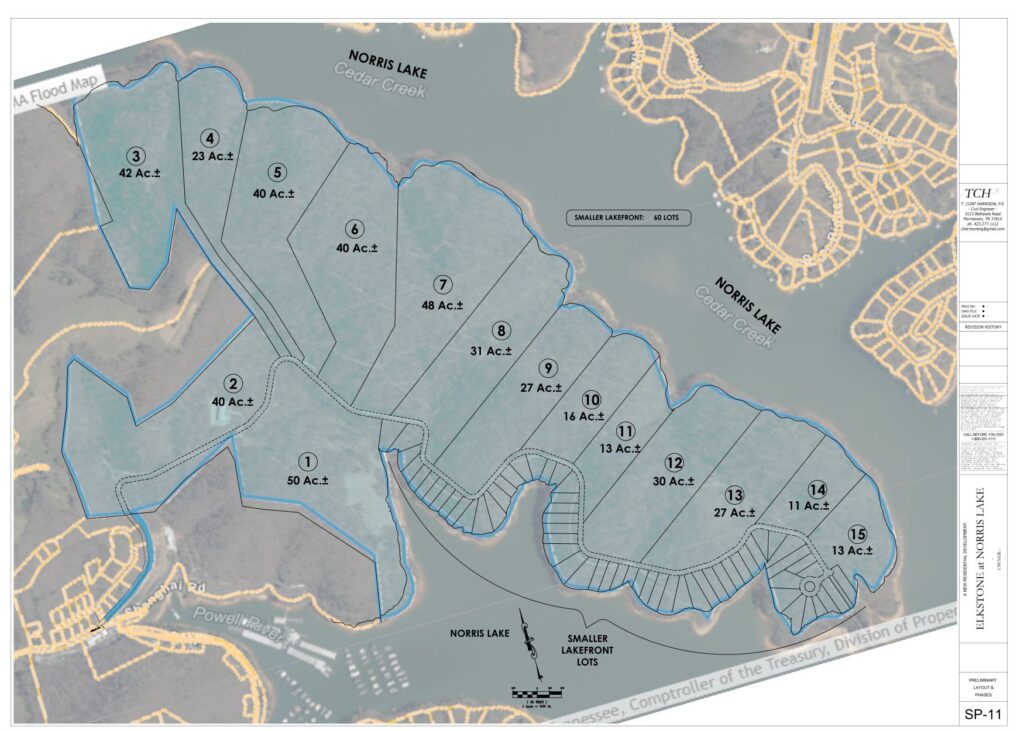
The letter submitted by T. Clint Harrison, P.E., on behalf of the proposed Elkstone at Norris Lake development sounds reassuring. It uses the language of professional engineering, careful consideration, applicable standards, field observations, and sound engineering judgment.
But when you examine what the letter actually says, a significant problem becomes apparent:
It promises that problems will be studied. It does not establish that those problems can be solved, who will pay to solve them, or whether the development can safely and adequately be supported by existing public infrastructure.
That is a substantial difference.
Mr. Harrison identifies himself as the design engineer for the developer. There is nothing inherently improper about a developer hiring its own professional engineer. However, an engineer working for the developer is not the same thing as an independent engineering review commissioned to protect the interests of Campbell County and its taxpayers.
The public should not be expected to accept assurances in place of independently verifiable engineering conclusions.
Let’s look at what this letter actually fails to address.
1. Where is the independent verification?
The letter repeatedly states that the engineering team will evaluate conditions, conduct reviews, examine drainage patterns, and consider appropriate improvements.
Those are descriptions of future work, not evidence of completed work.
It does not provide:
- An independently reviewed traffic impact analysis.
- Verified existing and projected traffic counts.
- A documented evaluation of Shanghai Road’s ability to accommodate additional traffic safely.
- An independent assessment of the Demory Road and Shanghai Road intersection.
- A comprehensive evaluation of emergency vehicle access.
- A quantified assessment of the additional infrastructure required.
- A detailed, independently reviewed cost estimate.
The question isn’t whether the developer intends to hire qualified engineers.
The question is whether Campbell County has sufficient independent evidence to make an informed decision before approving a development that could permanently affect public roads and public finances.
2. The existing road infrastructure is the problem, and this letter does not solve it.
Shanghai Road is approximately 1.9 miles of narrow, winding roadway. The existing road is not magically going to become safer or wider because a subdivision is professionally engineered.
The proposed development must be evaluated in the context of the roads people already use.
The developer’s own traffic study has identified substantial improvements, including:
- Widening Shanghai Road to approximately 20 feet from Demory Road to the proposed development entrance.
- Relocating and reconstructing the Demory Road/Shanghai Road intersection.
- Additional turn lanes along Demory Road.
- Reconstruction of portions of the Demory Road corridor.
- Additional right-of-way acquisition.
- Drainage and stormwater improvements.
These are not cosmetic improvements. They are substantial public infrastructure projects.
And here is the important question:
If these improvements are necessary to accommodate the development, why should Campbell County taxpayers be responsible for financing them?
The letter does not answer that question.
3. Let’s talk about the money.
Road construction is expensive. Widening an existing road is considerably more involved than simply putting down another layer of asphalt.
It can require:
- Excavation and extensive grading.
- Rock removal and earthwork.
- Additional right-of-way acquisition.
- Drainage ditches, culverts, and stormwater systems.
- Road base reconstruction.
- Asphalt paving.
- Retaining structures where terrain requires them.
- Utility relocation.
- Intersection reconstruction and traffic control.
- Engineering, permitting, and construction oversight.
For perspective, a Tennessee rural roadway infrastructure assessment estimated approximately $2.4 million per mile in 2021 dollars for design, widening, resurfacing, and associated improvements on a rural roadway.
That is a useful benchmark, not a bid for Shanghai Road. Actual costs will depend on terrain, drainage, right-of-way, rock, utilities, and the final design.
Using that benchmark:
- One mile of comparable improvements: approximately $2.4 million in 2021 dollars.
- Two miles: approximately $4.8 million in 2021 dollars.
- Three miles: approximately $7.2 million in 2021 dollars.
And these figures do not establish the cost of the specific Demory Road intersection reconstruction, additional turn lanes, land acquisition, or every drainage improvement identified in the Elkstone traffic study.
It is entirely possible that the total infrastructure package could reach several million dollars.
We need an actual engineering cost estimate before anyone can responsibly tell taxpayers what this project will cost them.
4. Who ultimately pays? Campbell County taxpayers deserve an answer.
There has already been discussion of using REIDA funds to help finance infrastructure improvements.
That deserves particular scrutiny.
Public financing does not make a project free. If county-accessed funds, public borrowing, or other public resources are used, the repayment terms, beneficiaries, financial risks, and any taxpayer exposure must be clearly disclosed.
Even if a repayment arrangement is established, taxpayers deserve to know:
- Who is legally responsible for repayment?
- What happens if the development does not sell as projected?
- What happens if the developer defaults?
- Is Campbell County guaranteeing the financing?
- Will county road funds be diverted from existing maintenance needs?
- Who pays for cost overruns?
- Who assumes responsibility for future maintenance?
Campbell County already maintains approximately 684 miles of roads across 872 roads, according to the county Highway Department.
Our existing roads, bridges, drainage systems, and maintenance needs are already a substantial public responsibility.
We should not casually add millions of dollars in infrastructure obligations without knowing precisely who is assuming the financial risk.
5. Stormwater is not a minor engineering detail.
The letter gives considerable attention to stormwater conditions along Shanghai Road.
That is appropriate, but it also raises important questions.
What happens to downstream properties when hundreds of acres are developed?
How will runoff change when trees, vegetation, and natural ground cover are replaced with roads, driveways, rooftops, and other impervious surfaces?
What happens during significant rainfall events?
Will existing culverts and drainage systems have sufficient capacity?
Who will be responsible if runoff causes erosion, flooding, or damage to neighboring properties?
The developer’s engineer says these conditions will be evaluated.
But a promise to evaluate a problem is not proof that the problem has been resolved.
Campbell County should require documented drainage calculations, appropriate stormwater controls, and independent technical review before approving plans that could affect existing residents.
6. Engineering a subdivision does not automatically make the surrounding public roads adequate.
This is perhaps the most important distinction.
The developer can design excellent internal roads. It can install proper drainage, meet pavement specifications, and construct roads that comply with applicable standards.
But none of that automatically corrects the deficiencies on Shanghai Road or Demory Road.
A development should not be evaluated solely by the quality of the roads inside its property boundaries.
It must also be evaluated by its impact on the public infrastructure required to serve it.
That includes road capacity, sight distance, intersection safety, drainage, emergency access, and the ability of existing infrastructure to accommodate additional traffic.
7. What happens after the development is approved?
This is another question the letter leaves unanswered.
Will all required improvements be completed before homes are occupied?
Will the developer provide financial guarantees sufficient to complete them?
Will the county have enforceable agreements requiring the developer to pay for improvements attributable to the development?
Will the county be left with additional maintenance obligations?
What happens if construction costs exceed the original estimates?
These are not unreasonable questions. They are basic financial and public-safety considerations.
Campbell County should not approve a project based on promises of improvements that may be years away, subject to funding, or dependent on future development activity.
WHAT CAMPBELL COUNTY SHOULD REQUIRE BEFORE APPROVAL
Before this development advances, the Planning Commission should require:
- An independent engineering review of the developer’s traffic study, paid for by the developer but commissioned or controlled by the county.
- A comprehensive traffic impact analysis that accounts for the proposed development, existing traffic, seasonal Norris Lake traffic, projected growth, and cumulative traffic from other potential developments.
- A documented safety and capacity evaluation of Shanghai Road, Demory Road, and their connecting intersections.
- A comprehensive stormwater and drainage evaluation, including downstream impacts.
- A detailed, itemized construction cost estimate for every necessary public-road and infrastructure improvement.
- A written financial commitment establishing that the developer, rather than Campbell County taxpayers, will pay for improvements attributable to the development.
- Enforceable financial guarantees ensuring that required improvements are completed before the development creates the additional public burden.
- Full disclosure of any proposed REIDA financing, public borrowing, repayment obligations, guarantees, and potential taxpayer exposure.
These are reasonable safeguards, not unreasonable obstacles to development.
THE BOTTOM LINE
Nobody is arguing that Campbell County should never grow or that property owners should not have the right to develop their land.
But development rights do not create an obligation for the public to subsidize the infrastructure necessary to make a private development possible.
There is a difference between economic development that benefits a community and development that transfers its costs and risks to the taxpayers.
The letter from Mr. Harrison may demonstrate that the developer intends to employ professional engineering services. It does not demonstrate that Shanghai Road and Demory Road can safely accommodate the proposed development, that the necessary improvements are financially feasible, or that Campbell County will be protected from the resulting costs.
We should not be approving a development first and figuring out how to afford the infrastructure afterward.
Campbell County taxpayers should not be left holding the bill for road widening, intersection reconstruction, drainage improvements, and infrastructure deficiencies created or substantially worsened by private development.
If the development requires millions of dollars in public infrastructure improvements, then the financial responsibility must be established before approval, not negotiated after the fact.
A professional-sounding letter is not an engineering conclusion. A proposed improvement is not a completed improvement. And a promise to address infrastructure concerns is not a guarantee that taxpayers will be protected.
Before Campbell County says yes to this development, it needs answers, independent verification, actual construction costs, and legally enforceable financial commitments.
The burden should be on the developer to demonstrate that this project can be built safely, responsibly, and without placing an unreasonable financial burden on the people who already live and pay taxes here.
**Growth should pay its own way. Campbell County taxpayers should not be expected to finance someone else’s private development.
WLAF welcomes op-eds. Please send them to wlaf@1450wlaf.com.
(WLAF NEWS PUBLISHED 11/2/2026-6AM)